· Updated
POS vs. Traditional Cash Registers. What's the Difference, and Is It Worth Switching?
หยุดใช้เครื่องคิดเงินแบบธรรมดา! ถ้าไม่อยากให้ร้านคุณเสียโอกาสไปมากกว่านี้
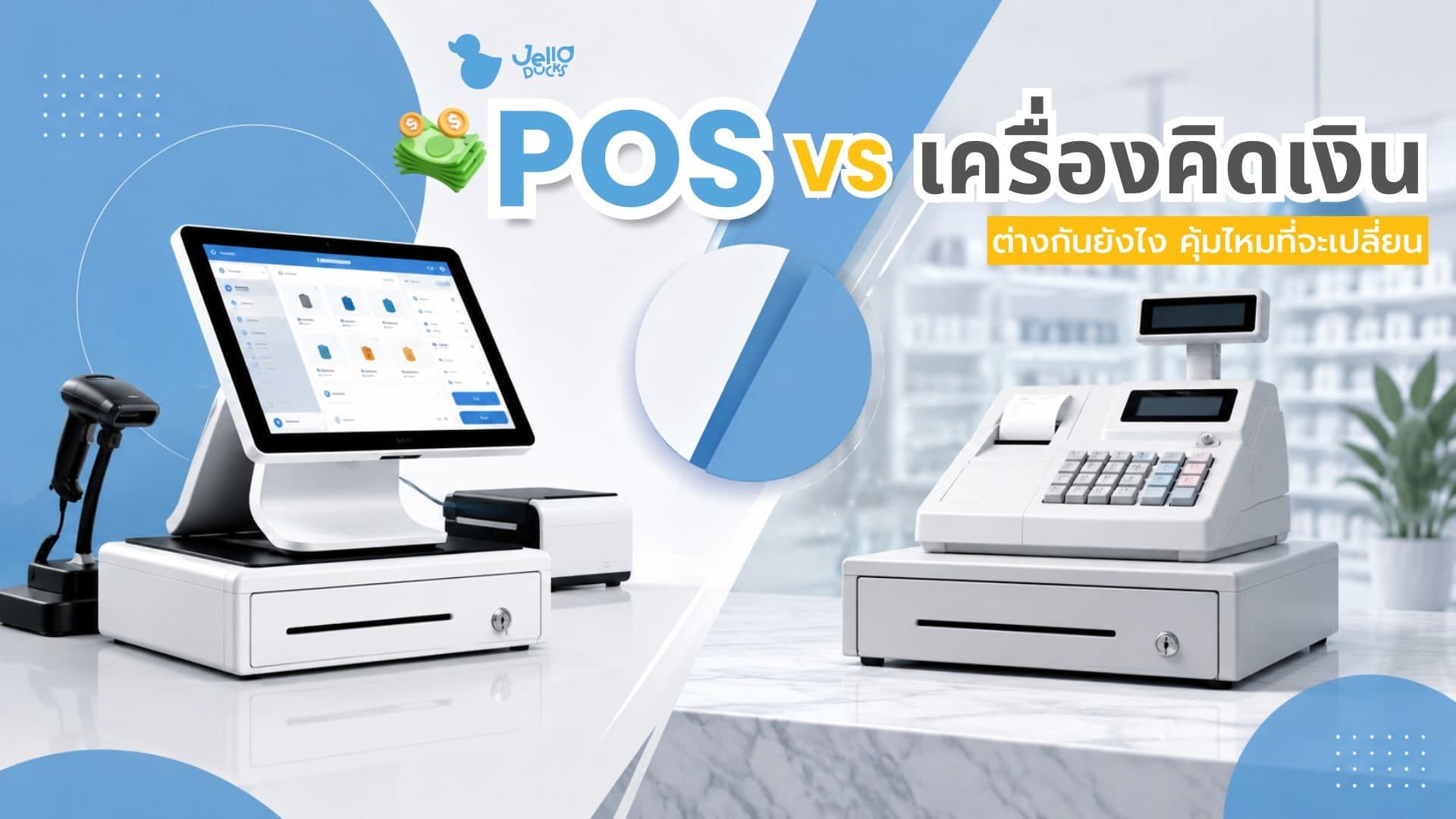
POS vs. Traditional Cash Registers. What's the Difference, and Is It Worth Switching?
Restaurants that have been using a traditional cash register for years often wonder whether switching is actually necessary. After all, sales are still happening, money is still being collected, and customers keep coming in. That's a reasonable question — and the honest answer is that not every restaurant needs to switch.
But the more useful question to ask yourself is this: when it comes to POS vs. cash register, where exactly does the difference lie — and are there hidden costs from staying with the old system that you simply haven't noticed yet? That answer is what will tell you whether the time to switch has come.
What Can a Traditional Cash Register Do? and Where Does It Fall Short?
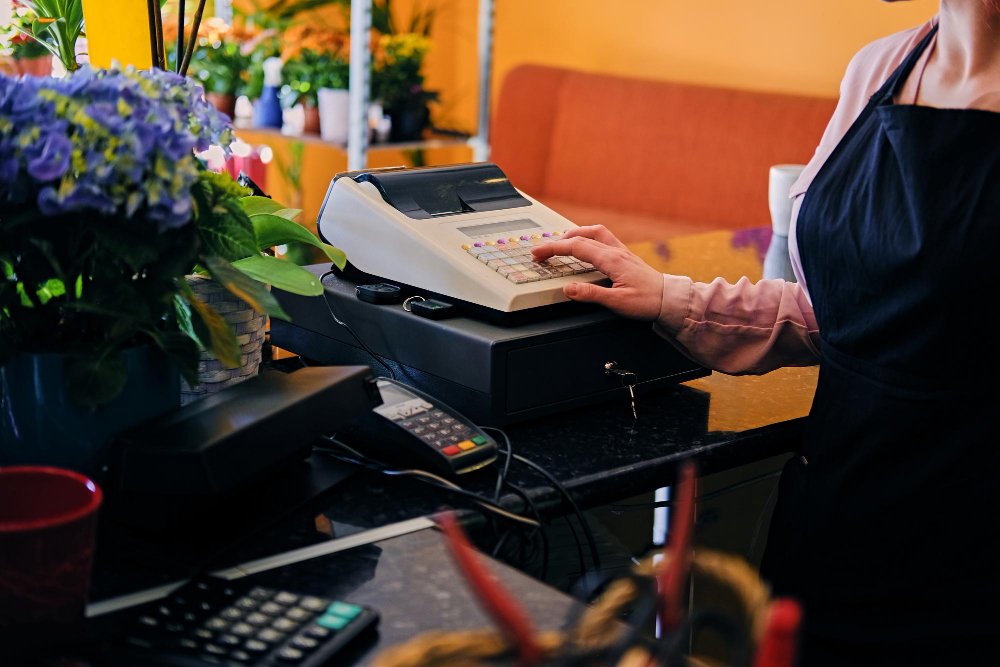
A traditional cash register does one thing very well: calculate totals and collect payment. But that's where its capabilities end. It doesn't record who ordered what. It doesn't automatically notify the kitchen. It generates no sales reports broken down by menu item or time of day. And it doesn't natively support digital payments.
If your restaurant has few customers and you can keep orders in your head, these limitations may not feel urgent. But as the restaurant gets busier — or when a new staff member joins who isn't yet familiar with every menu item — the hidden costs start to surface: wrong orders, missing bills, and time lost reconciling the register every night before closing.
What Can a POS System Do That a Cash Register Can't?
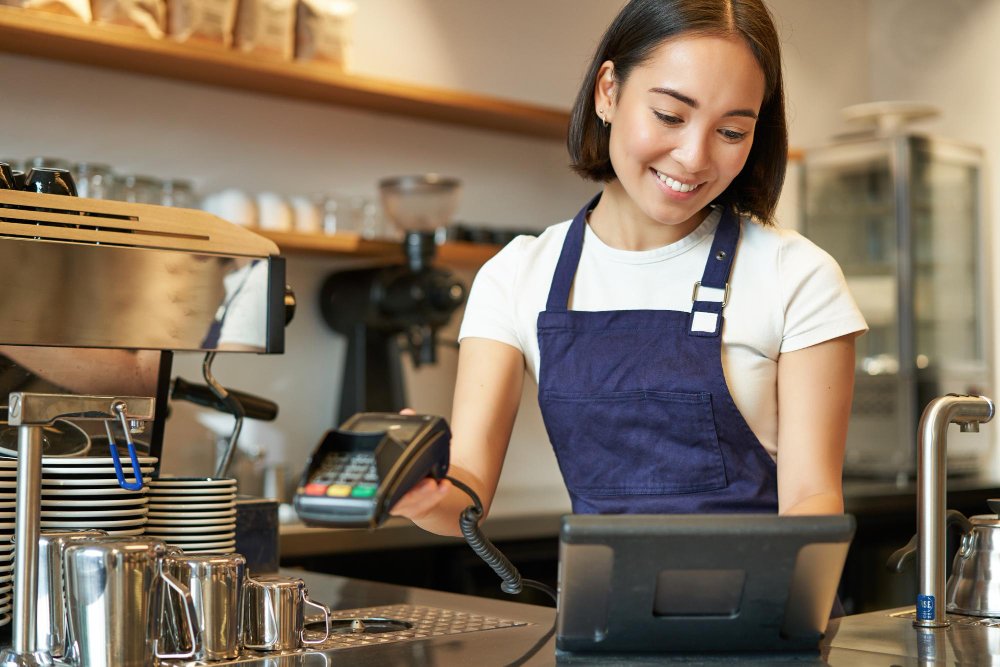
A modern POS system doesn't just handle payment — it changes how the entire restaurant operates. Orders taken by front-of-house staff are sent directly to the kitchen automatically, with no shouting across the floor or walking slips over by hand. Customers can pay with cash, QR code, or card. And every transaction is recorded in the system in real time.
The most significant difference is data. A POS generates a record every time a sale is made, and over time, that data becomes the restaurant's institutional memory — telling you which dishes sell best and when, which days bring the most customers, and which tables tend to take longer than average. These insights allow business decisions to be made from facts, not intuition.
Read deeper into this topic at What Are POS and CRM? Why Every Restaurant Needs Both
What Are the Hidden Costs of Sticking with a Traditional Cash Register?
Before concluding that a cash register is cheaper, it's worth running the numbers. Restaurants that rely on handwritten orders typically experience incorrect orders or missing bills at a rate of around 2 to 5 percent of total sales. At 5,000 baht in daily revenue, that's 100 to 250 baht disappearing every day without the owner ever noticing. Multiply that across a full year, and the figure reaches tens of thousands of baht — lost quietly, with no alarm going off.
There's also the hidden cost of time. If closing reconciliation takes 30 to 60 minutes every night, that adds up to over 180 to 360 hours per year spent on a task a system could handle automatically. And perhaps most importantly, there's the cost of making decisions from memory rather than data — something difficult to quantify, but with long-term consequences that outweigh almost everything else.
So Is a POS System Worth It? and When Should You Make the Switch?

Whether a POS system is worth it depends on what your restaurant actually needs. If daily transactions are starting to exceed 30 to 50 orders, or if more than one staff member needs to take orders simultaneously, or if you want to know which menu items are the most profitable on any given day — those are the signals that the time has come.
That said, if you've just opened, sales are still low, and you're not yet sure the business will take off, a lower-cost system that can scale later is a perfectly reasonable place to start. What to watch out for is choosing a system that requires a complete overhaul when your business grows — because that will become a much bigger burden than it looks like today.
Ready to move from a cash register to a system that gives you real data? See Jello Ducks starting prices — from 590 baht per branch.
FAQ — Frequently Asked Questions
Q: If I switch from a cash register to a POS, how long will it take my staff to learn?
A well-designed POS system can be picked up by most staff within a single day. If the system you're evaluating requires longer training — or needs a technician called in every time a new employee joins — that's a sign its interface wasn't truly built for front-of-house use.
Q: Will I lose my existing data if I switch from a cash register to a POS?
Data from a traditional cash register is rarely stored in any structured way, so switching to a POS is typically a clean start — and that's a good thing. From day one, every transaction will be fully recorded and actually usable.
Share article:
More Articles
Recommended related articles

What Is Restaurant CRM and How Does It Help You Understand Your Customers?
Repeat customers don't come back just for the food

How to Collect Restaurant Customer Data Without Making Them Fill Out Forms
The best data comes from what customers actually do — not what they say they will

A Customer Goes Missing for 30 Days. How Much Chance Is Left to Win Them Back?
Customers don't decide to stop coming — they just run out of reasons to return