· อัปเดต
วิธีเลือก POS ร้านอาหารให้เหมาะกับธุรกิจของคุณ
ร้านที่มีหลายสาขาหรือวางแผนจะขยาย ควรดูอะไรเพิ่ม?
วิธีเลือก POS ร้านอาหารให้เหมาะกับธุรกิจของคุณ
ร้านอาหารหลายแห่งซื้อระบบ POS มาแล้วพบว่าใช้ไม่ได้อย่างที่คิด บางร้านจ่ายไปหลักหมื่น แต่ท้ายที่สุดก็กลับมาจดออเดอร์ด้วยมือเหมือนเดิม เพราะพนักงานใช้ไม่เป็น หรือระบบไม่ตอบโจทย์การทำงานจริงของร้านปัญหาเหล่านี้มักไม่ได้เกิดจากตัวระบบที่แย่ แต่เกิดจากการเลือกโดยไม่รู้ว่าตัวเองต้องการอะไรก่อน
บทความนี้จะช่วยให้เจ้าของร้านมีหลักในการพิจารณา ก่อนที่จะตัดสินใจซื้อระบบ วิธีเลือก pos ร้านอาหารที่ใช่จริงๆ
ร้านขนาดเล็กควรมองหาอะไรในระบบ POS?
สำหรับร้านที่มีโต๊ะไม่เกิน 10 โต๊ะหรือมีพนักงานหน้าร้านไม่กี่คน สิ่งที่สำคัญที่สุดไม่ใช่ความครบฟีเจอร์
แต่คือ "เริ่มใช้ได้เร็วและไม่ต้องใช้เวลาเรียนรู้นาน" ระบบที่ซับซ้อนเกินไปจะสร้างภาระมากกว่าประโยชน์ในช่วงแรก
สิ่งที่ร้านเล็กควรเช็กให้ได้ก่อนตัดสินใจ คือระบบรองรับการรับออเดอร์ผ่านแท็บเล็ตหรือมือถือได้ไหม ออกบิลและรองรับ QR payment ได้ไหม และสามารถดูยอดขายรายวันผ่านมือถือได้โดยไม่ต้องรอนั่งหน้าคอมพิวเตอร์ นอกจากนี้ยังต้องถามเรื่องค่าใช้จ่ายที่ซ่อนอยู่ เช่น ค่า setup ค่าอบรม และค่าบำรุงรักษารายปี เพราะตัวเลขเหล่านี้มักไม่ได้อยู่ในโฆษณา
ร้านที่มีหลายสาขาหรือวางแผนจะขยาย ควรดูอะไรเพิ่ม?
หากตอนนี้มีสาขาเดียวแต่มีแผนจะขยาย การเลือก POS ให้รองรับอนาคตตั้งแต่แรกจะช่วยประหยัดต้นทุนได้มาก เพราะการย้ายข้อมูลจากระบบหนึ่งไปอีกระบบเมื่อธุรกิจโตขึ้นนั้นทั้งยุ่งยากและเสียเวลา
ระบบที่รองรับการขยายสาขาควรมี dashboard รวมยอดขายจากทุกสาขาในที่เดียว ควบคุมเมนูและราคาจากส่วนกลางได้ และที่สำคัญคือบันทึกข้อมูลลูกค้าแบบ cross-branch ซึ่งหมายความว่าลูกค้าคนเดียวกันไปสาขาไหนก็ตาม ระบบจะจำเขาได้และรู้ว่าเขาชอบอะไร สิ่งเหล่านี้คือความต่างที่ทำให้ร้านที่มีหลายสาขาสามารถดูแลลูกค้าได้อย่างสม่ำเสมอ
POS อย่างเดียวพอไหม หรือต้องการ CRM ควบคู่ไปด้วย?
นี่คือคำถามที่เจ้าของร้านส่วนใหญ่ไม่ได้ถามตัวเองตอนเลือกระบบ ทั้งที่มันเป็นคำถามที่สำคัญที่สุด ซึ่งระบบ POS ที่ดีจะบอกได้ว่า "ขายได้เท่าไหร่" แต่จะไม่บอกว่า "ใครซื้อ ซื้อบ่อยแค่ไหน และทำไมบางคนถึงหยุดมา"
ถ้าเป้าหมายคือแค่จัดการออเดอร์และเก็บเงินให้ถูกต้อง POS อย่างเดียวก็เพียงพอ แต่ถ้าต้องการรู้ว่าลูกค้าใหม่กลับมากี่คนหลังจากมาครั้งแรก หรืออยากส่งโปรโมชั่นให้ตรงกลุ่มแทนที่จะยิงหาทุกคน ระบบที่รวม POS และ CRM ไว้ด้วยกันจะตอบโจทย์ได้ครบกว่า โดยไม่ต้องซื้อแยกหรือเชื่อมต่อข้อมูลด้วยตัวเอง ซึ่งเป็นสิ่งที่หลายร้านมองข้ามและเสียใจภายหลัง
คำแนะนำสำหรับร้านอาหารไทยโดยเฉพาะ มีอะไรที่ต้องระวัง?
ระบบ POS จากต่างประเทศหลายตัวไม่ได้ออกแบบมาสำหรับการใช้งานในร้านอาหารไทยโดยตรง ทั้งเรื่องของภาษาในหน้าจอ การรองรับ PromptPay และ QR พร้อมเพย์ รวมถึงวิธีการจัดการโต๊ะที่ต่างออกไปจากร้านทางตะวันตก
ก่อนตัดสินใจ ควรเช็กด้วยว่าระบบมี support ภาษาไทยหรือไม่ และทีมซัพพอร์ตตอบสนองได้ไวแค่ไหนในกรณีที่ระบบมีปัญหาช่วงเวลาเร่งด่วน เพราะเวลาที่ระบบล่มในช่วง peak hour นั้นคือเวลาที่เจ็บปวดที่สุด และสุดท้ายถ้ามีโอกาสทดลองใช้งานจริงก่อนซื้อ ให้ทดสอบในช่วงที่ร้านยุ่งเสมอ ไม่ใช่ตอนร้านเงียบ
อยากเห็นว่าระบบ POS ที่ใช้งานง่ายจริงๆ หน้าตาเป็นยังไง ดู ระบบ POS ของ Jello Ducks ที่พนักงานใหม่เรียนรู้ได้ภายในวันเดียว
คำถามที่พบบ่อย (FAQ)
Q: ต้องใช้งบเท่าไหร่สำหรับ POS ร้านอาหารในไทย?
ราคาแตกต่างกันมากตั้งแต่ฟรีไปจนถึงหลักหมื่นต่อปี สำหรับร้านที่เพิ่งเปิด ระบบแบบ subscription รายเดือนมักคุ้มกว่าการซื้อขาด เพราะไม่ต้องลงทุนก้อนใหญ่ตั้งแต่แรกและยังปรับเปลี่ยนได้หากระบบไม่ตอบโจทย์
Q: ทดลองใช้ก่อนซื้อได้ไหม?
ระบบที่ดีส่วนใหญ่มี trial ให้ใช้ 7-30 วัน แนะนำให้ทดลองในช่วงที่ร้านยุ่งจริง เพราะจะเห็นปัญหาได้ชัดกว่าการทดสอบตอนร้านเงียบ ระบบที่ดีควรใช้งานได้ลื่นไหลแม้ในช่วงที่ออเดอร์เข้ามาพร้อมกันหลายโต๊ะ
ถ้าอยากเข้าใจว่าระบบ POS และ CRM ช่วยแก้ปัญหานี้ได้อย่างไรตั้งแต่ต้น อ่านได้ที่ POS และ CRM คืออะไร ทำไมร้านอาหารต้องมีทั้งคู่ และถ้าอยากรู้ว่าทำไมลูกค้าใหม่ถึงไม่กลับมา พร้อมวิธีแก้ไข ดูได้ที่ ลูกค้าใหม่ 7 ใน 10 ไม่กลับมา แก้ยังไงให้กลับมาซ้ำ
แชร์บทความ:
บทความอื่นๆเพิ่มเติม
บทความแนะนำที่เกี่ยวข้อง
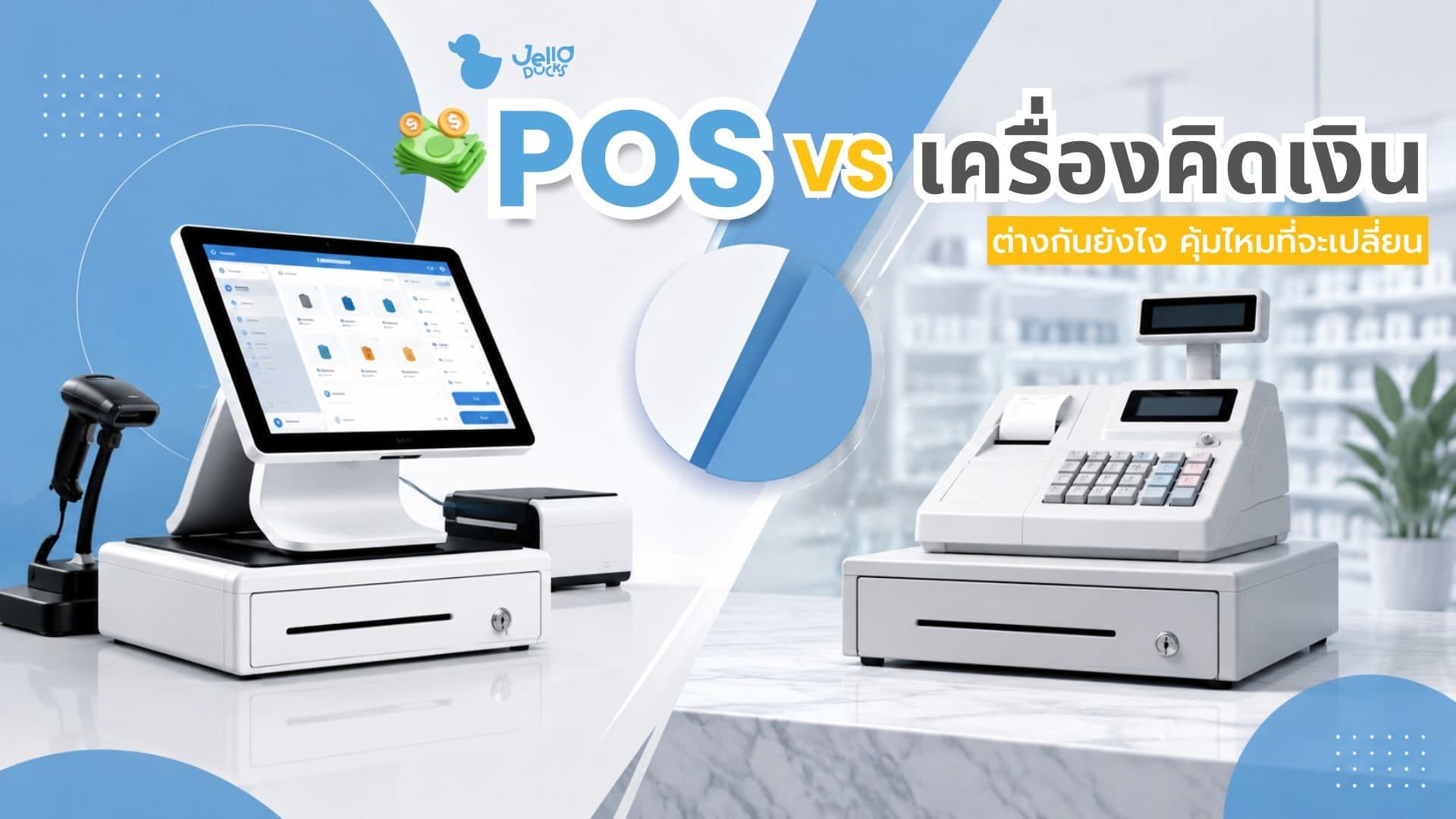
POS vs เครื่องคิดเงินแบบเดิม ต่างกันยังไง คุ้มไหมที่จะเปลี่ยน?
หยุดใช้เครื่องคิดเงินแบบธรรมดา! ถ้าไม่อยากให้ร้านคุณเสียโอกาสไปมากกว่านี้

CRM กับธุรกิจร้านอาหารคืออะไร? ช่วยให้รู้จักลูกค้าได้ยังไงบ้าง?
ร้านที่ลูกค้ากลับมาซ้ำ ไม่ได้อาศัยแค่ความอร่อย

วิธีเก็บข้อมูลลูกค้าร้านอาหารแบบไม่ต้องให้กรอกฟอร์ม
ข้อมูลที่ดีที่สุดมาจากสิ่งที่ลูกค้าทำจริงๆ ไม่ใช่สิ่งที่เขาบอกว่าจะทำ